

Cathedral by Raymond Carver: A Comprehensive Analysis
Finding accessible “Cathedral” PDF versions requires caution regarding legality and copyright; explore reliable sources and consider alternative online reading options for Raymond Carver’s work․
Raymond Carver, a pivotal figure in American short fiction, championed a minimalist aesthetic profoundly influencing the literary landscape․ His stories, including the celebrated “Cathedral,” are characterized by spare prose, understated emotion, and a focus on the lives of working-class individuals․ This stylistic approach, often termed “dirty realism,” eschews elaborate descriptions and psychological probing, instead presenting narratives with stark clarity and emotional resonance․
Carver’s commitment to minimalism isn’t merely stylistic; it’s a reflection of his thematic concerns – the difficulties of communication, the search for connection in a fragmented world, and the quiet desperation of everyday life․ Accessing his work, like “Cathedral” in PDF format, allows for focused study of these elements․ His influence extends beyond literature, impacting film and other art forms, solidifying his legacy as a master of concise and impactful storytelling․
The Significance of “Cathedral” in Carver’s Oeuvre
“Cathedral” stands as a cornerstone within Raymond Carver’s body of work, exemplifying his mastery of minimalist storytelling and thematic exploration․ Published in 1983, the story encapsulates Carver’s recurring motifs: fractured relationships, masculine vulnerability, and the potential for unexpected connection․ It’s often considered his most critically acclaimed piece, showcasing his ability to evoke profound emotional depth through seemingly simple narratives․
The story’s enduring power lies in its exploration of vision – both literal and figurative – and its challenge to conventional notions of empathy․ Finding a “Cathedral” PDF allows for close textual analysis, revealing the subtle nuances of Carver’s prose․ It represents a pivotal moment in his career, solidifying his reputation as a leading voice in American literature and a champion of the short story form․

Plot Summary and Key Characters
A skeptical narrator reluctantly hosts his wife’s blind friend, Robert; accessing a “Cathedral” PDF reveals their evolving dynamic and the story’s core themes․
The Narrator: Initial Perspective and Development
Initially, the narrator displays a closed-minded and somewhat prejudiced perspective, revealed through his internal monologue when learning about Robert, his wife’s blind friend․ He’s uncomfortable and struggles to comprehend a life lived without sight, relying on superficial judgments․ A readily available “Cathedral” PDF allows close examination of his evolving thoughts․
Throughout the story, and particularly evident when reading the text directly from a PDF source, the narrator undergoes a significant transformation․ His interaction with Robert challenges his preconceived notions, forcing him to confront his own limitations in empathy and understanding․ The act of drawing the cathedral becomes a pivotal moment, symbolizing his opening up to a new way of perceiving the world․ He moves from skepticism to a shared experience, demonstrating a profound emotional and intellectual growth․
Robert: The Blind Man and His Impact
Robert, the blind man, serves as the catalyst for change within the story, profoundly impacting the narrator’s worldview․ He embodies a quiet strength and openness, unburdened by visual preconceptions․ Accessing a “Cathedral” PDF reveals the nuanced details of his character, highlighting his ability to connect with others on a deeper, emotional level․
His arrival challenges the narrator’s limited perspective, forcing him to reconsider his assumptions about perception and connection․ Robert’s genuine curiosity and willingness to engage dismantle the narrator’s initial discomfort and hostility․ Through their shared experience of drawing the cathedral, Robert facilitates the narrator’s emotional awakening, demonstrating that true vision extends beyond the physical realm․ Studying the story via PDF emphasizes Robert’s pivotal role․
The Narrator’s Wife and Her Role
The narrator’s wife functions as a crucial bridge between him and Robert, possessing a past connection that shapes the story’s trajectory․ A “Cathedral” PDF download reveals her sensitivity and empathy, qualities starkly contrasting with her husband’s initial cynicism․ She understands Robert’s humanity and actively encourages the encounter, hoping to broaden her husband’s limited emotional range․
Her detailed descriptions of Robert, gleaned from their previous correspondence, prepare the narrator, albeit inadequately, for his arrival․ She represents a more open and compassionate worldview, subtly challenging her husband’s ingrained prejudices․ Accessing the text in PDF format allows for a closer examination of her patient attempts to foster understanding and connection within her marriage, ultimately paving the way for the narrator’s transformation․

Themes Explored in “Cathedral”
A “Cathedral” PDF reveals central themes of vision, communication, and empathy, prompting readers to question perceptions and embrace genuine human connection․
Vision and Blindness: Literal and Figurative
The readily available “Cathedral” PDF powerfully illustrates the duality of vision and blindness, extending beyond Robert’s physical impairment․ Carver masterfully employs this contrast to explore the narrator’s emotional and intellectual limitations․ Initially, the narrator’s perspective is clouded by prejudice and a narrow worldview, rendering him ‘blind’ to genuine connection․
Robert, despite his lack of sight, possesses a profound ability to ‘see’ people and situations with clarity and empathy – a form of insight the narrator desperately lacks․ The story suggests true vision isn’t solely dependent on physical sight, but rather on openness, understanding, and a willingness to connect with others on a deeper level․ Accessing the text via PDF allows focused analysis of how Carver uses imagery and symbolism to reinforce this central theme․
Communication and Connection
A “Cathedral” PDF reveals how Carver portrays the challenges and possibilities of genuine human connection․ The initial communication between the narrator and Robert is strained, marked by awkwardness and the narrator’s internal biases․ However, through a shared activity – drawing the cathedral – a surprising level of understanding emerges․
This pivotal moment transcends verbal exchange, fostering a non-verbal connection built on shared experience and vulnerability․ The story suggests that true communication isn’t always about words, but about a willingness to open oneself to another person․ Studying the text in PDF format facilitates close reading of the dialogue and the silences, highlighting the subtle shifts in the narrator’s perception and his growing empathy towards Robert․
Empathy and Understanding
Analyzing a “Cathedral” PDF demonstrates Carver’s exploration of empathy as a transformative force․ Initially, the narrator displays limited understanding and even prejudice towards Robert, the blind man․ His perspective is shaped by preconceived notions and a lack of genuine curiosity․ However, as the story unfolds, and particularly during the drawing of the cathedral, the narrator begins to experience a shift in his emotional landscape․
This shift is facilitated by actively listening to Robert and attempting to see the world through his eyes․ The PDF allows for repeated readings, emphasizing the subtle cues that reveal the narrator’s growing capacity for empathy․ Ultimately, the story suggests that understanding others requires a willingness to transcend one’s own limitations and embrace vulnerability․
Masculinity and Emotional Expression
Examining a “Cathedral” PDF reveals Carver’s nuanced portrayal of masculinity and its constraints on emotional expression․ The narrator embodies a traditional, stoic male archetype, initially uncomfortable with vulnerability and open communication․ His interactions with Robert challenge these ingrained patterns, forcing him to confront his own emotional limitations․
The story subtly critiques the societal pressures that discourage men from expressing their feelings․ The act of drawing the cathedral becomes a symbolic release, allowing the narrator to tap into a deeper emotional register․ Repeated readings of the PDF highlight the narrator’s gradual dismantling of emotional barriers, suggesting that genuine connection requires a willingness to embrace vulnerability and authenticity․

Literary Techniques and Style
Analyzing a “Cathedral” PDF showcases Carver’s minimalist prose, first-person narration, and impactful dialogue, revealing character and driving the narrative forward effectively․
First-Person Narration and Limited Perspective
Examining a “Cathedral” PDF reveals Carver’s masterful use of first-person narration, deeply immersing the reader within the narrator’s consciousness․ This technique, however, presents a deliberately limited perspective․ We experience the story solely through the eyes of a man initially characterized by skepticism and emotional detachment․
This restricted viewpoint is crucial; it forces the reader to grapple with the narrator’s biases and gradual evolution․ Initially, his understanding of the world, and particularly of Robert, the blind man, is clouded by prejudice and a lack of empathy․ The narrative’s power lies in witnessing his slow, painstaking journey toward genuine connection․
Accessing the story via a PDF allows for close textual analysis, highlighting how Carver strategically withholds information, mirroring the narrator’s own limited awareness and fostering a compelling sense of discovery․
Carver’s Minimalist Prose Style
Analyzing a “Cathedral” PDF showcases Raymond Carver’s hallmark minimalist prose․ He employs simple sentences, sparse descriptions, and avoids elaborate metaphors, creating a stark and unadorned narrative․ This isn’t a stylistic deficiency, but a deliberate choice that amplifies the story’s emotional impact․
Carver’s restraint forces the reader to actively participate in constructing meaning, filling in the gaps left by the understated language․ Dialogue is particularly crucial, carrying significant weight due to the lack of extensive descriptive passages․ The power resides in what isn’t said as much as what is․
Studying the text in PDF format allows for focused attention on Carver’s precise word choices, revealing how much emotional resonance he achieves with so little․ It’s a testament to his skill․
Symbolism: The Cathedral as a Metaphor
Examining a “Cathedral” PDF reveals the central symbol: the cathedral itself․ It transcends a mere architectural structure, representing spiritual awakening, connection, and a broadened perspective for the narrator․ Initially, he views it with skepticism, mirroring his limited emotional range․
The act of drawing the cathedral with Robert, the blind man, becomes a pivotal moment․ It symbolizes the narrator’s attempt to ‘see’ beyond his superficial understanding of the world and himself․ Robert’s blindness ironically allows him a clearer vision of emotional truths․
The cathedral, historically a place of worship and community, suggests the possibility of finding meaning and connection beyond the confines of everyday life․ The PDF format aids focused analysis of this potent symbol․
Use of Dialogue and its Revealing Nature
Analyzing a “Cathedral” PDF highlights Carver’s masterful use of dialogue․ Conversations aren’t merely exchanges of information; they reveal character, expose vulnerabilities, and drive the narrative forward․ The narrator’s initial curt responses to Robert demonstrate his discomfort and prejudice․
The dialogue between the narrator and his wife subtly unveils their strained relationship and her past․ Robert’s questions, though seemingly simple, force the narrator to confront his own emotional limitations․
Carver’s minimalist style extends to dialogue – what isn’t said is often as significant as what is․ The PDF format allows close reading of these nuanced interactions, revealing the characters’ inner lives and the story’s underlying themes․

Historical and Cultural Context
Accessing a “Cathedral” PDF reveals its roots in the American short story tradition and postmodernism, reflecting a media-saturated era and evolving societal norms․
The American Short Story Tradition
Raymond Carver’s “Cathedral” firmly positions itself within the rich tapestry of the American short story tradition, building upon the foundations laid by masters like Ernest Hemingway and Flannery O’Connor․ These authors, and others, prioritized concise narratives, realistic dialogue, and explorations of the human condition – elements powerfully present in Carver’s work․
The accessibility of a “Cathedral” PDF allows for close study of how Carver distills complex emotions into minimalist prose, a hallmark of the tradition․ Unlike earlier, more ornate styles, Carver’s approach emphasizes what is not said, relying on subtext and implication․ This echoes a broader shift in American literature towards a more understated and psychologically nuanced portrayal of everyday life․
Furthermore, the story’s focus on working-class characters and domestic settings aligns with a long-standing American literary interest in representing the lives of ordinary people, offering a counterpoint to narratives centered on wealth or heroism․
Postmodernism and its Influence on Carver
Raymond Carver’s “Cathedral” exhibits subtle yet significant influences from postmodern literary thought, despite not being overtly “postmodern” in style․ A readily available “Cathedral” PDF facilitates examining these nuances․ Postmodernism often questions grand narratives and embraces ambiguity, characteristics reflected in the story’s open-endedness and rejection of easy resolutions․
The narrator’s initial skepticism and limited perspective challenge the notion of objective truth, a key postmodern concern․ His eventual, transformative experience doesn’t offer a definitive answer but rather a shift in perception․ This aligns with postmodernism’s emphasis on subjective experience and the constructed nature of reality․
Moreover, Carver’s minimalist prose can be seen as a rejection of modernist complexity, favoring a fragmented and understated approach that mirrors the postmodern sense of disillusionment and uncertainty․
The Role of Television and Media in the Story
Television functions as a significant symbol of the narrator’s emotional detachment and limited worldview in “Cathedral․” Accessing a “Cathedral” PDF allows close analysis of how Carver portrays its influence․ The narrator’s reliance on television for entertainment and understanding reveals his inability to connect with others on a deeper level, preferring mediated experiences to genuine interaction․
He describes his wife’s fascination with television documentaries about the blind, highlighting a superficial engagement with difference․ This passive consumption of media reinforces his own prejudices and hinders his capacity for empathy․ The television represents a barrier to authentic connection, a distraction from self-reflection․
Ultimately, the story suggests that true understanding requires moving beyond the superficiality of media representations and embracing direct, personal experience․

Analyzing the Ending
A “Cathedral” PDF reveals the drawing as a pivotal moment; the narrator’s newfound state of mind signifies a breakthrough in perception and emotional openness․
The Drawing of the Cathedral: A Turning Point
Accessing a “Cathedral” PDF allows close examination of the pivotal drawing scene, marking a profound shift for the narrator․ Initially hesitant and skeptical, he’s guided by Robert to physically create a cathedral, not from memory or observation, but from feeling․ This act transcends mere artistic representation; it becomes a symbolic journey into empathy and understanding․
The narrator’s closed eyes during the drawing are crucial – he’s relinquishing visual control, relying on Robert’s direction and his own internal sensations․ This parallels Robert’s experience of navigating the world without sight․ The completed drawing isn’t about accuracy; it’s about the process of connection and the narrator’s willingness to surrender his preconceived notions․
Finding a digital copy facilitates repeated readings, highlighting how this moment unlocks a new level of emotional awareness, fundamentally altering his perspective․
The Narrator’s State of Mind at the Conclusion
Locating a “Cathedral” PDF enables careful analysis of the narrator’s transformed state․ At the story’s end, he experiences something akin to revelation, a feeling he’d previously been incapable of accessing․ He’s no longer the cynical, passively judgmental man introduced at the beginning․ The act of drawing, guided by Robert, has broken down his emotional barriers․
He describes being “inside” the cathedral, a sensation that suggests a newfound sense of peace and belonging․ This isn’t a literal experience, but a metaphorical one, representing his entry into a more empathetic and connected way of being․
The narrator doesn’t offer grand pronouncements; his change is subtle, conveyed through his altered perception and quiet contemplation․ A readily available PDF allows for repeated study of this nuanced shift․
Interpretations of the Final Scene
Accessing a “Cathedral” PDF facilitates deeper exploration of the ambiguous ending․ The narrator, with eyes closed, “sees” the cathedral through Robert’s guidance, symbolizing a transcendence of physical sight․ This isn’t about literal vision, but about achieving a deeper understanding through connection and empathy․
Some interpret the scene as a spiritual awakening, a moment of grace where the narrator sheds his cynicism and embraces a more profound sense of being․ Others view it as a commentary on the limitations of language and the power of shared experience․
The open-ended nature of the conclusion invites multiple readings, making a readily available PDF invaluable for comparative analysis and scholarly debate․

“Cathedral” and the Concept of a Cathedral Town
PDF access to “Cathedral” aids understanding of the story’s ironic title; a “cathedral town” evokes history and culture, contrasting the narrator’s limited world․
The Etymology and Historical Significance of “Cathedral Town”
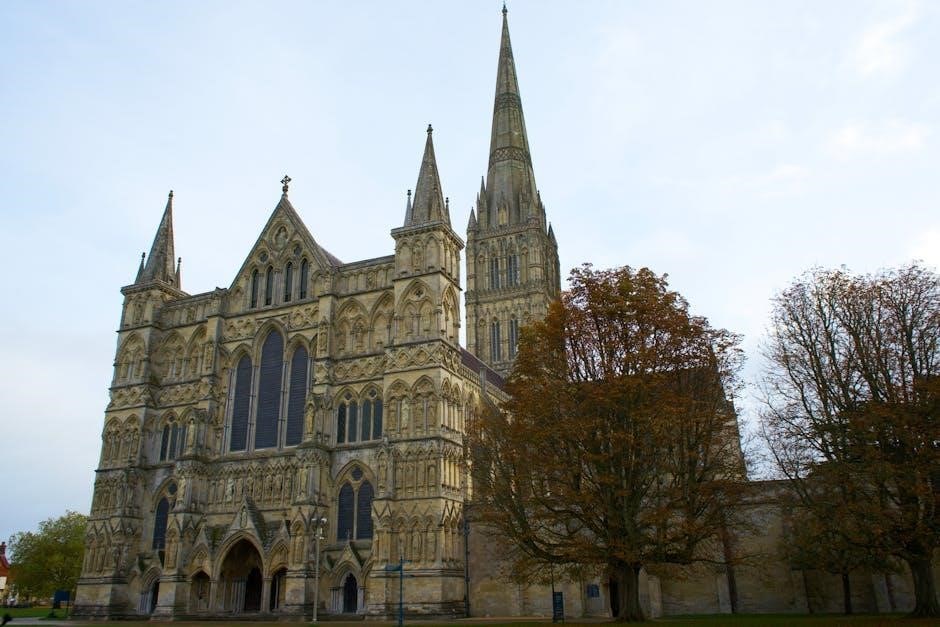
The term “cathedral town” originates from the historical development of settlements growing around cathedral churches, particularly in the United Kingdom․ Originally, a town gained city status specifically by hosting a cathedral – a seat of a bishop․ This connection imbued the town with religious, administrative, and cultural importance․
Historically, these towns served as centers of learning and pilgrimage, fostering a distinct atmosphere often described as conservative, quiet, and possessing a rich history․ The presence of the cathedral shaped the town’s identity and social fabric․ Accessing a PDF of Carver’s “Cathedral” allows readers to contemplate this nuanced term, recognizing the irony within the story’s setting and the narrator’s initial lack of understanding․
The emotive nuance of “cathedral town” suggests a place set apart, a haven of tradition, which sharply contrasts with the modern, media-saturated world depicted in the story․
The Cultural Nuances Associated with Cathedral Towns
Cathedral towns often embody a specific cultural profile: middle-class sensibilities, a conservative outlook, and a generally peaceful ambiance․ They frequently possess a strong sense of local history and tradition, often attracting tourists interested in heritage and architecture․ This atmosphere, however, can also imply a certain insularity or resistance to change․
Raymond Carver’s “Cathedral,” available as a PDF for closer study, subtly critiques this cultural archetype․ The narrator’s initial prejudices and limited worldview represent a stagnation common in such environments․ The arrival of Robert, the blind man, disrupts this complacency, forcing a confrontation with unfamiliar perspectives․
The story’s exploration of communication and empathy challenges the assumed cultural norms of a “cathedral town,” suggesting that genuine connection requires openness and a willingness to transcend preconceived notions․

Finding and Accessing “Cathedral” as a PDF
Locating a “Cathedral” PDF involves searching reputable online literary archives and educational databases, always respecting copyright regulations and legal access guidelines․
Reliable Sources for PDF Downloads
Securing a legitimate PDF of Raymond Carver’s “Cathedral” necessitates careful source selection․ Project Gutenberg, while offering numerous classic texts, doesn’t currently host this specific story in PDF format․ University library digital collections often provide access to scholarly articles about the story, sometimes including the text itself, but require institutional access․
JSTOR and similar academic databases are valuable, though typically subscription-based․ Websites offering free PDF downloads should be approached with caution, as they may infringe on copyright․ Consider purchasing a digital anthology containing “Cathedral” from reputable booksellers like Amazon or Barnes & Noble, ensuring legal and high-quality access․ Always verify the source’s credibility before downloading to avoid malware or copyright violations․ Exploring online literary magazines that have previously published the story is another potential avenue․
Legality and Copyright Considerations
Downloading “Cathedral” as a PDF from unofficial sources presents significant legal and ethical concerns․ Raymond Carver’s work remains protected by copyright, even decades after his death․ Distributing or obtaining a PDF without proper authorization constitutes copyright infringement, potentially leading to legal repercussions․
Websites offering free downloads often operate outside the law, potentially exposing users to malware or viruses․ Supporting authors and publishers by purchasing legally obtained copies—either physical books or authorized digital versions—is crucial․ Public domain status applies only to works where copyright has expired, which is not yet the case for “Cathedral․” Respecting intellectual property rights ensures continued literary creation and accessibility through legitimate channels․ Prioritize ethical sourcing when seeking this impactful short story․
Alternative Formats and Online Reading Options
Beyond seeking a “Cathedral” PDF, numerous legal avenues exist to experience Raymond Carver’s masterpiece․ Many online platforms offer the story for purchase as an ebook, compatible with various devices․ Project Gutenberg, while not currently hosting “Cathedral,” provides a vast library of public domain literature․
Authorized online literary magazines or collections may include the story․ Libraries frequently offer digital lending services, allowing access to ebooks and audiobooks without purchase․ Exploring these options ensures legal and safe access․ Websites like the author’s official page or reputable booksellers are reliable sources․ Consider audio versions for a different engagement with Carver’s minimalist prose, enhancing the story’s emotional impact․